On this page8
The short answer
AI slop websites are pages that keep the defaults AI builders and templates produce: stock fonts, glowing blobs, frosted glass, gradient text and filler copy. On 126 YC startup home pages from 2026, the median score was 9 out of 100. 23% scored 35 or more, and the most common tell was one default font everywhere.
| Finding | Sites | Share |
|---|---|---|
| Human touch (score under 15) | 69 | |
| Template-heavy or worse (35 or more) | 29 | |
| Looks AI-made or worse (60 or more) | 6 | |
| Three or more tells | 58 | |
| No tells at all | 13 |
How much AI slop is on startup websites?
Less than you might think. Half the pages scored 9 or lower, and the middle half sat between 0 and 32. The checker scores how generic a design looks, so a low score means someone made choices, with or without AI.
| Verdict | Score | Sites |
|---|---|---|
| Human touch | 0 to 14: no tells worth mentioning | |
| A few defaults | 15 to 34: mostly designed, a few defaults | |
| Template-heavy | 35 to 59: many choices left at the defaults | |
| Looks AI-made | 60 to 79: most people would guess AI | |
| AI slop | 80 to 100: the generated look, untouched |
What are the most common AI slop tells?
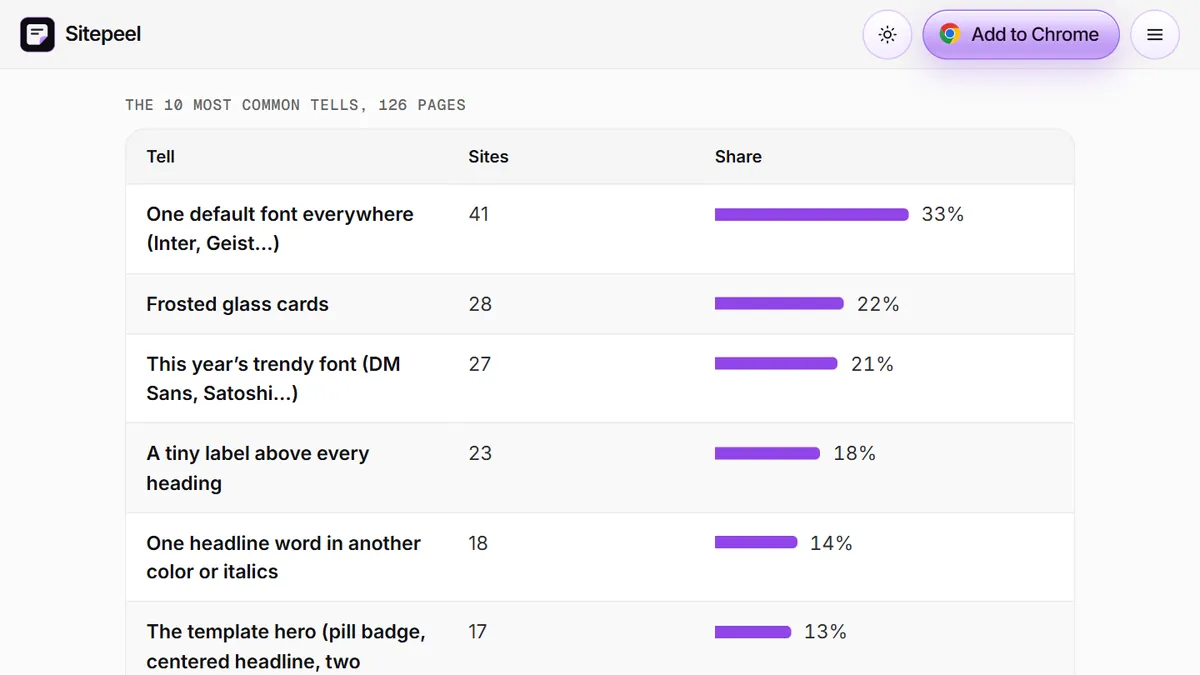
A tell is one thing the checker finds on the page, like a stock font or a glowing blob. The typical page had 2; 46% had three or more.
| Tell | Sites | Share |
|---|---|---|
| One default font everywhere (Inter, Geist…) | 41 | |
| Frosted glass cards | 28 | |
| This year’s trendy font (DM Sans, Satoshi…) | 27 | |
| A tiny label above every heading | 23 | |
| One headline word in another color or italics | 18 | |
| The template hero (pill badge, centered headline, two buttons) | 17 | |
| Glowing blobs behind the content | 16 | |
| Stock Tailwind grays | 16 | |
| No picture of the product | 15 | |
| Grids of icon, title and one line | 15 |
Which kinds of tells add the most points?
Decoration is the biggest source: glows, glass cards and gradients. Type comes next, mostly one default font everywhere. Copy tells, like filler words and em dashes, add less than people expect.
| Kind | Examples | Share of points |
|---|---|---|
| Effects | Glows, glass, gradients, soft corners | |
| Type | Default or trendy fonts, accent words, tiny labels | |
| Layout | Template hero, icon card grids, centered sections | |
| Copy | Filler words, em dashes, round-number brags | |
| Pictures | No product picture, stock photos | |
| Color | Stock Tailwind grays and purples |
Do newer startups look more AI-made?
Not by much. The batches are only months apart, and each one has a few template-heavy pages and many hand-made ones.
| Batch | Sites | Median score | 35 or more |
|---|---|---|---|
| Winter 2026 | 46 | 12 | |
| Spring 2026 | 30 | 11 | |
| Summer 2026 | 24 | 2 | |
| Fall 2026 | 26 | 15 |
How we checked
We took Y Combinator’s public company directory (the yc-oss/api copy, updated October 27, 2026), shuffled each 2026 batch with a fixed seed and listed the first 55 companies with a website: 220 in all. We ran the free AI slop checker once on each home page, one at a time, on October 28, 2026, and stopped after 146.
- 134 pages loaded; 12 didn’t (blocked, too slow or offline) and are left out
- 8 showed too little to judge (a canvas or a sign-in wall) and are left out of the scores
- Each page is read at 1440px wide, as a first-time visitor sees it
- The score measures how generic the design looks, not who or what built it
- No startup is named here or in the data: every row is anonymous
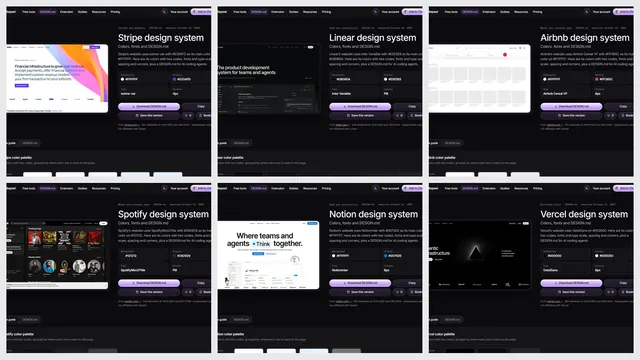
- Brands for comparison were checked the same way on the same day
Download the data and cite it
The CSV has one anonymous row per page: batch, industry, score, verdict, the tells found and the theme. The tells column uses the checker’s rule names, like glass for frosted glass cards. Free to use with credit (CC BY 4.0).
Sitepeel (2026). What AI slop looks like on real websites: 126 startup home pages. Checked October 28, 2026. https://sitepeel.dev/reports/ai-slop-websites-2026/Questions
What are AI slop websites?
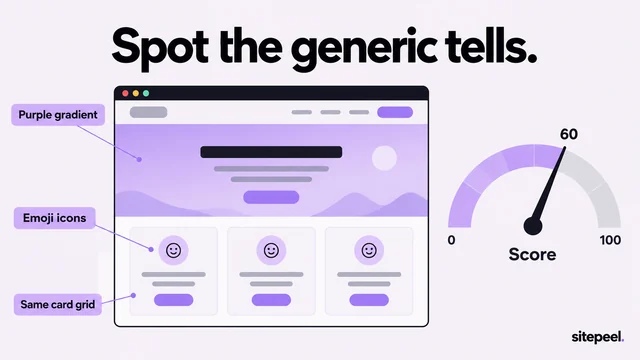
Websites that keep the look AI builders and templates produce by default: Inter everywhere, glowing blobs, frosted glass cards, gradient text, a pill badge over a centered headline and filler copy. Nobody chose those details; they came with the tool.
Is there an AI slop website detector?
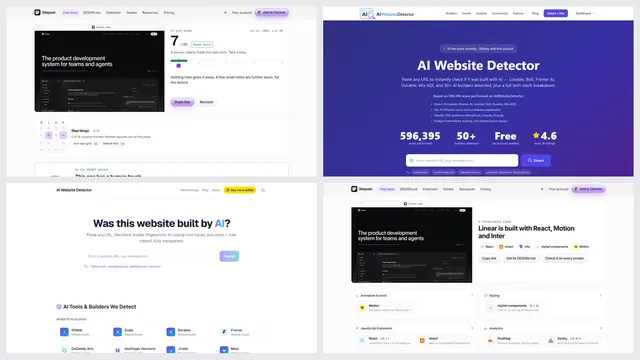
Yes. Sitepeel’s AI slop checker is free with no sign-in. Paste a link to get a score from 0 to 100, every tell marked on the page and, from a score of 40, a prompt to fix it.
What are the signs of an AI-generated website?
In our sample the most common were one default font everywhere, frosted glass cards, this year’s trendy font. One tell means little; several together suggest nobody changed the defaults.
Do most startups have AI-made websites?
Not by the look of them. 55% of the YC 2026 home pages we checked scored under 15, and 23% scored 35 or more.
Can the checker tell who built a site?
No. It measures how generic a design looks. People make generic sites too, and AI can make careful ones. To see which builder made a site, use a tech stack checker.