
 Claude Code
 Cursor
 Codex
 GitHub Copilot
 Perplexity AIBrand
AI · DESIGN.md · measured November 4, 2026
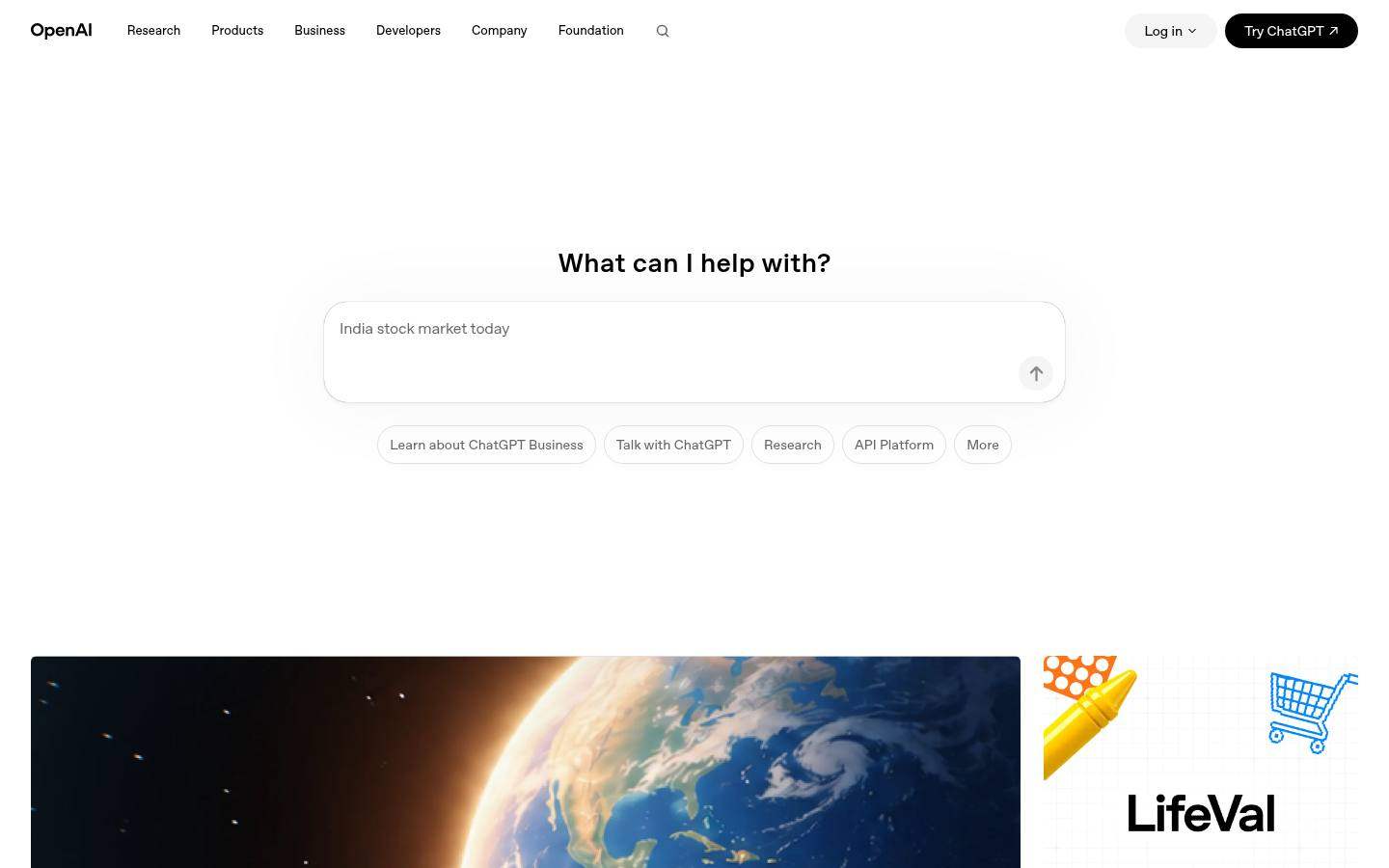
OpenAI design system
Light interface · OpenAI Sans · Pill corners
- #FFFFFF
- #000000
- #AB4F7A
- #6BC67F
From openai.com ↗ · 329 elements at 1440×900 and 390×844 Independent analysis, not affiliated with OpenAI
OpenAI color palette
9 colors with hex codes, grouped by where each one is used on the page.
Surfaces
White
#FFFFFFbackground · --color-primitive-gray-0Page background · 2×Near Black 4%
#0000000AoverlayTranslucent fill for cards and controls · 4×Text
Near Black
#000000on-surface · --color-syntax-copyPrimary text and headings · 97×Slate
#666666on-surface-variantSecondary text · 14×White
#FFFFFFon-primaryText and icons on primaryAccents
Pink
#AB4F7AprimaryBrand accent (CSS variable)Green
#6BC67FsecondaryAccent (CSS variable)Dark Orange
#653218tertiaryAccent (CSS variable)Borders
Near Black 12%
#0000001FoutlineBorders and dividers · 5×OpenAI fonts and type scale
One family carries the whole interface.
AaOpenAI SansWeights 400, 500OpenAI Sans, OpenAI Sans Variable Scripts, sans-serif
headline-displayPage title (h1)OpenAI22px · 500 · 1.26 · -0.01em
mobile 20px
mobile 20px
body-mdBody textThe quick brown fox jumps over the lazy dog18px · 500 · 1.32 · -0.01em
label-lgLarge buttons and tabsThe quick brown fox jumps over the lazy dog17px · 400 · 1.65 · -0.01em
label-mdButtons, navigation and labelsThe quick brown fox jumps over the lazy dog14px · 500 · 1.4
label-smSmall labels and badgesThe quick brown fox jumps over the lazy dog13px · 500 · 1.51
Contrast
Text on #FFFFFF
AaAAA
21.0:1AaAA
5.7:1Spacing
No strict grid · 85% are multiples of 4px
xs3.9pxsm8pxmd12pxlg32pxxl64pxgutter8pxBreakpoints: 640px 767px 768px 800px 1024px 1200px 1201px
Shapes
Corner radii, most used first.
full9999px · 28×
sm4px · 16×
xl40px · 12×
md6.08px · 4×
lg24px · 4×
Depth
Shadow
Shadow
OpenAI UI components
Rebuilt from the measured CSS.
Try ChatGPT (opens in a new
Products
Input text
Inline link
Motion
Interface transitions
0.25s0.3s0.1s0.2seasecubic-bezier(0, 0, 1, 1)
Do’s and don’ts
Rules written from the measurements, so a coding agent stays on style.
- Use #FFFFFF for the page.
- Keep text in 2 levels: #000000, #666666.
- Use #AB4F7A as the brand accent: header, logo and key highlights.
- Set headlines in OpenAI Sans with tight tracking (-0.01em).
- Reuse the measured spacing steps (8px, 12px, 32px).
- Make buttons and chips fully rounded (9999px); most other elements use 4px corners.
- Introduce new font families beyond OpenAI Sans.
- Use #AB4F7A for large backgrounds or body text.
- Make interface transitions slower than 0.3s.
OpenAI DESIGN.md174 lines
---
version: alpha
name: OpenAI
description: "Light interface measured from openai.com: OpenAI Sans type, pink accents, flat surfaces and pill-shaped controls."
colors:
  background: "#FFFFFF"
  surface: "#FFFFFF"
  on-surface: "#000000"
  on-background: "#000000"
  on-surface-variant: "#666666"
  overlay: "#0000000A"
  outline: "#0000001F"
  primary: "#AB4F7A"
  on-primary: "#FFFFFF"
  secondary: "#6BC67F"
  tertiary: "#653218"
typography:
  headline-display:
    fontFamily: OpenAI Sans
    fontSize: 22px
    fontWeight: 500
    lineHeight: 1.26
    letterSpacing: -0.01em
  body-md:
    fontFamily: OpenAI Sans
    fontSize: 18px
    fontWeight: 500
    lineHeight: 1.32
    letterSpacing: -0.01em
  label-lg:
    fontFamily: OpenAI Sans
    fontSize: 17px
    fontWeight: 400
    lineHeight: 1.65
    letterSpacing: -0.01em
  label-md:
    fontFamily: OpenAI Sans
    fontSize: 14px
    fontWeight: 500
    lineHeight: 1.4
  label-sm:
    fontFamily: OpenAI Sans
    fontSize: 13px
    fontWeight: 500
    lineHeight: 1.51
  headline-display-mobile:
    fontFamily: OpenAI Sans
    fontSize: 20px
    fontWeight: 500
    lineHeight: 1.2
    letterSpacing: -0.01em
rounded:
  sm: 4px
  md: 6.08px
  lg: 24px
  xl: 40px
  full: 9999px
spacing:
  xs: 3.9px
  sm: 8px
  md: 12px
  lg: 32px
  xl: 64px
  gutter: 8px
components:
  button-primary:
    backgroundColor: "{colors.on-surface}"
    textColor: "{colors.on-primary}"
    typography: "{typography.label-md}"
    rounded: "{rounded.xl}"
    padding: 0px 20px
    height: 36px
  button-ghost:
    textColor: "{colors.on-surface}"
    typography: "{typography.label-lg}"
    rounded: 0px
    padding: 0px
  input-field:
    textColor: "{colors.on-surface}"
    rounded: 0px
    padding: 0px
  link:
    textColor: "{colors.on-surface}"
---

# OpenAI Design System

## Overview

OpenAI describes itself as: “We believe our research will eventually lead to artificial general intelligence, a system that can solve human-level problems.” The interface is light, built on **White (#FFFFFF)** with **Near Black (#000000)** text, and **Pink (#AB4F7A)** as the main accent.

Type is set in **OpenAI Sans**. Headlines run large with tight negative tracking; body text is 18px. Depth comes from soft drop shadows. Controls are pill-shaped.

Measured from [openai.com](https://openai.com/) on November 4, 2026 at 1440×900 and 390×844 from 329 rendered elements. Values are computed styles from the live page, not the original source files.

## Colors

The palette has 9 roles.

- **White (#FFFFFF):** Page background, seen 2 times. Token `background`, CSS `--color-primitive-gray-0`.
- **Near Black (#000000):** Primary text and headings, seen 97 times. Token `on-surface`, CSS `--color-syntax-copy`.
- **Slate (#666666):** Secondary text, seen 14 times. Token `on-surface-variant`.
- **Near Black 4% (#0000000A):** Translucent fill for cards and controls, seen 4 times. Token `overlay`.
- **Near Black 12% (#0000001F):** Borders and dividers, seen 5 times. Token `outline`.
- **Pink (#AB4F7A):** Brand accent (CSS variable). Token `primary`.
- **White (#FFFFFF):** Text and icons on primary. Token `on-primary`.
- **Green (#6BC67F):** Accent (CSS variable). Token `secondary`.
- **Dark Orange (#653218):** Accent (CSS variable). Token `tertiary`.

## Typography

**OpenAI Sans** carries the whole interface. Fallback stack: `OpenAI Sans, OpenAI Sans Variable Scripts, sans-serif`.

- **headline-display:** OpenAI Sans 22px at weight 500, line height 1.26, tracking -0.01em (20px on mobile). Page title (h1).
- **body-md:** OpenAI Sans 18px at weight 500, line height 1.32, tracking -0.01em. Body text.
- **label-lg:** OpenAI Sans 17px at weight 400, line height 1.65, tracking -0.01em. Large buttons and tabs.
- **label-md:** OpenAI Sans 14px at weight 500, line height 1.4. Buttons, navigation and labels.
- **label-sm:** OpenAI Sans 13px at weight 500, line height 1.51. Small labels and badges.

## Layout

Spacing is mostly on a 4px grid (85% of measured values), with some off-grid steps. Match the measured scale rather than rounding everything.

- **Scale:** xs 3.9px, sm 8px, md 12px, lg 32px, xl 64px.
- **Gaps:** 8px is the most common gap in flex and grid layouts.
- **Breakpoints:** 640px, 767px, 768px, 800px, 1024px, 1200px, 1201px.

## Elevation & Depth

Raised elements use soft drop shadows. The most used recipes:

- `rgba(0, 0, 0, 0) 0px 0px 0px 0px, rgba(0, 0, 0, 0) 0px 0px 0px 0px, rgba(0, 0, 0, 0) 0px 0px 0px 0px, rgba(0, 0, 0, 0) 0px 0px 0px 0px, rgba(0, 0, 0, 0.02) 0px 4px 6px 0px, rgba(0, 0, 0, 0.05) 0px 0px 2px 0px`
- `rgba(0, 0, 0, 0) 0px 0px 0px 0px, rgba(0, 0, 0, 0) 0px 0px 0px 0px, rgba(0, 0, 0, 0) 0px 0px 0px 0px, rgba(0, 0, 0, 0) 0px 0px 0px 0px, rgba(0, 0, 0, 0.04) 0px 3px 6px 0px, rgba(0, 0, 0, 0.04) 0px 4px 80px 8px, rgba(0, 0, 0, 0.62) 0px 0px 1px 0px`

## Shapes

Interactive controls are pill-shaped. Measured radii, most used first:

- **full (9999px):** 28 elements.
- **sm (4px):** 16 elements.
- **xl (40px):** 12 elements.
- **md (6.08px):** 4 elements.
- **lg (24px):** 4 elements.

## Components

Measured from the rendered page. Token values reference the tokens above.

- **button-primary (“Try ChatGPT (opens in a new wind”):** #000000 fill, #FFFFFF text, 14px/500, 40px radius, padding 0px 20px.
- **button-ghost (“Products”):** transparent fill, #000000 text, 17px/400, padding 0px.
- **input-field:** transparent fill, #000000 text, 16px/400, padding 0px.
- **link:** transparent fill, #000000 text, padding 0px.

## Do's and Don'ts

- Do use #FFFFFF for the page.
- Do keep text in 2 levels: #000000, #666666.
- Do use #AB4F7A as the brand accent: header, logo and key highlights.
- Do set headlines in OpenAI Sans with tight tracking (-0.01em).
- Do reuse the measured spacing steps (8px, 12px, 32px).
- Do make buttons and chips fully rounded (9999px); most other elements use 4px corners.
- Don't introduce new font families beyond OpenAI Sans.
- Don't use #AB4F7A for large backgrounds or body text.
- Don't make interface transitions slower than 0.3s.

## Motion

Interface transitions are quick: 0.25s, 0.3s, 0.1s, 0.2s.

- **Easing:** `ease`, `cubic-bezier(0, 0, 1, 1)`, `cubic-bezier(0.6, 0, 0.4, 1)`.
- **Reduced motion:** the page responds to `prefers-reduced-motion`.

Generated by [Sitepeel](https://sitepeel.dev/design-md/openai.com/), the free DESIGN.md generator (engine 2026.10.29+b828a475ee10).
Fonts
What font does OpenAI use?
OpenAI uses OpenAI Sans (weights 400 and 500) on openai.com. Page titles are 22px at weight 500 (20px on phones) and body text is 18px. Measured on November 4, 2026.
- AaOpenAI Sans · 400, 500
Colors
OpenAI colors: palette and hex codes
OpenAI’s main colors are #FFFFFF (white) for the background, #000000 (near black) for text and #AB4F7A (pink) as the main accent, with #6BC67F (green) and #653218 (dark orange) as other accents. Measured on November 4, 2026.
- #FFFFFF · white
- #000000 · near black
- #666666 · slate
- #AB4F7A · pink
- #6BC67F · green
- #653218 · dark orange
Tech stack
What is OpenAI built with?
OpenAI’s website (openai.com) is built with Contentful, Next.js, React, Radix UI and Tailwind CSS. Measured on November 4, 2026.
- JavaScript framework
- Next.js 16.4.2, React 19.3.0-canary-278794d7-2
- Hosting & CDN
- Vercel, Cloudflare
- Analytics
- Cloudflare Web Analytics, Vercel Speed Insights, Datadog RUM, Statsig
- Site builder & CMS
- Contentful
- UI & CSS
- Radix UI, Tailwind CSS 4.x
What you can build with it
Landing pages, pricing tables, dashboards: your AI coding agent builds them in this style, with these colors, fonts, spacing and buttons instead of its defaults.
Download DESIGN.md, put it in your project’s root folder, then ask your agent for a page.
Build a landing page for my product. Follow for every color, font, spacing value, corner and button.
Need a page behind a login?
The DESIGN.md generator Chrome extension makes one from any page you have open, including dashboards and pages behind a login.
More in AI
All DESIGN.md examples →
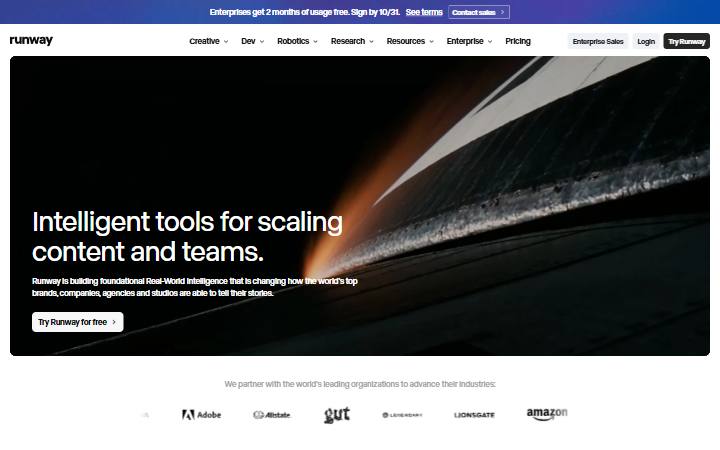
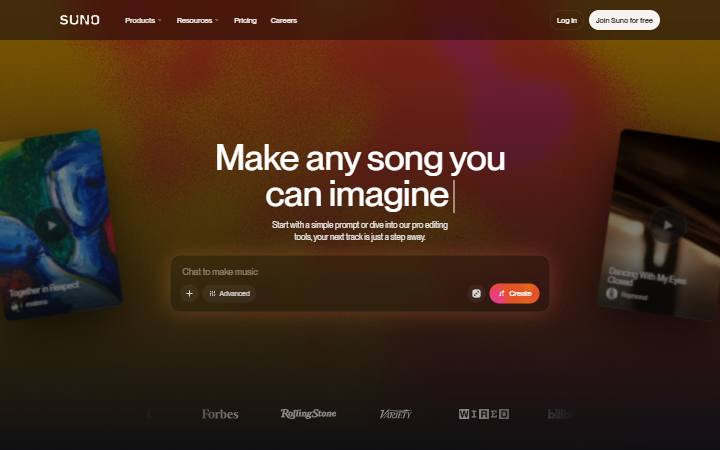
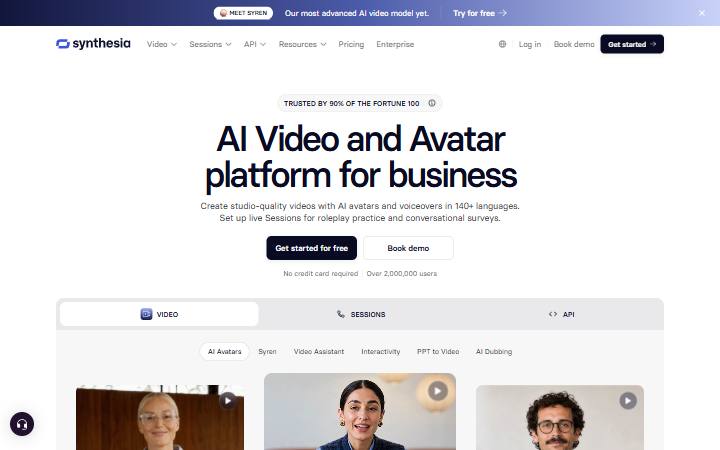
Not in the library? Make a DESIGN.md from any site.
FAQ
OpenAI design system questions
What font does OpenAI use?
OpenAI’s website uses OpenAI Sans (weights 400 and 500). Page titles are 22px at weight 500 (20px on phones) and body text is 18px. Measured on November 4, 2026.
What are the OpenAI colors and hex codes?
On openai.com: #FFFFFF (white) for the background, #000000 (near black) for text and #AB4F7A (pink) as the main accent, with #6BC67F (green) and #653218 (dark orange) as other accents. The color palette above lists all 9 colors with their hex codes and where each one is used.
What is the OpenAI design system?
The design system on this page is openai.com’s, as measured on November 4, 2026: OpenAI Sans type, #AB4F7A as the main color and pill-shaped corners, written down as a DESIGN.md. It is not OpenAI’s own documentation.
What is OpenAI built with?
OpenAI’s website (openai.com) is built with Contentful, Next.js, React, Radix UI and Tailwind CSS. The full tech stack Sitepeel found: Next.js, Vercel, React, Cloudflare, Cloudflare Web Analytics, Vercel Speed Insights, Contentful, Radix UI, Tailwind CSS and Datadog RUM. Measured on November 4, 2026.
What is the OpenAI DESIGN.md?
A plain-text file with OpenAI’s measured colors, type, spacing, corners and components as tokens, plus short rules, in the DESIGN.md format Google published with Stitch. Your AI coding agent reads it and builds in this style. More about DESIGN.md.
How do I use it with Claude Code or Cursor?
Download the file and put it in your project’s root folder, then ask your agent to follow DESIGN.md. Step-by-step guides: Claude Code, Cursor, Codex, GitHub Copilot.
Is this OpenAI’s official design system?
No. Sitepeel measured it from openai.com’s public page on November 4, 2026. It is an independent analysis, not made or approved by OpenAI.
Can I use OpenAI’s style in my own product?
Use it to learn, prototype and compare. For a real product, make the style your own, and never copy OpenAI’s logo, name, pictures or text.
How accurate are the values?
Each value was measured on the rendered page after it fully loaded, on desktop and mobile: colors where they appear, type with tracking, spacing, corners, shadows and hover states. Sites change, so check the date at the top.